US Jobs Report 2026 Shows Steady Employment Growth
By News Story US • February 24, 2026
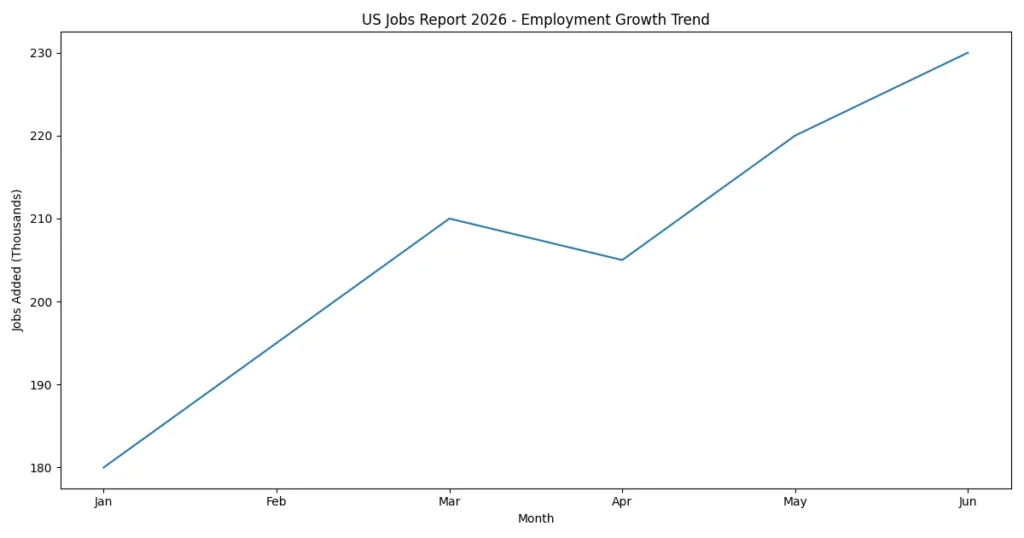
The latest US jobs report 2026 indicates steady employment growth across multiple sectors, reflecting resilience in the labor market. The data provides insight into hiring trends, wage growth, and workforce participation levels, helping policymakers, businesses, and investors evaluate broader economic conditions.
Employment data remains one of the most closely watched economic indicators in the United States. Monthly labor market reports influence financial markets, guide monetary policy decisions, and provide a snapshot of overall economic momentum.
What the US Jobs Report 2026 Reveals
According to the official release from the U.S. Bureau of Labor Statistics (BLS), nonfarm payroll employment increased at a moderate pace during the reporting period. The unemployment rate remained relatively stable, and wage growth showed gradual improvement.
Key highlights from the US jobs report 2026 include:
- Job gains in healthcare and professional services
- Stable unemployment rate
- Moderate wage growth
- Slight increase in labor force participation
Official employment data is published monthly by the U.S. Bureau of Labor Statistics:
https://www.bls.gov/
These reports include detailed breakdowns by industry, region, and demographic categories.
Sector Breakdown in the US Jobs Report 2026
The US jobs report 2026 reveals differences in hiring activity across industries.
Healthcare and Social Assistance
Healthcare continues to add jobs steadily due to ongoing demand for medical services and support roles. Aging population trends contribute to consistent hiring within this sector.
Professional and Business Services
This sector shows continued expansion, driven by consulting, administrative support, and technology-related services.
Manufacturing
Manufacturing employment remains relatively stable, reflecting steady production demand and supply chain normalization.
Construction
Construction employment shows moderate growth, supported by housing demand and infrastructure projects.
Diversified sector growth helps maintain overall labor market balance.
Unemployment Rate and Labor Force Participation
The unemployment rate measures the percentage of individuals actively seeking work but unable to find employment. The US jobs report 2026 indicates that unemployment levels remain within a stable range.
Labor force participation also increased slightly. This metric reflects the share of working-age individuals who are either employed or actively looking for work. Rising participation can indicate improving confidence in job availability.
Stable participation rates contribute to economic stability and consumer confidence.
Wage Growth and Household Income
Wage growth remains an important component of the US jobs report 2026. Moderate wage increases can improve household purchasing power and support consumer spending.
However, rapid wage growth can also influence inflation dynamics. Policymakers carefully evaluate wage trends when assessing economic balance.
Recent inflation data discussed in the US inflation CPI report 2026 provides additional context for wage-related trends.
https://newsstoryus.com/us-inflation-cpi-report-2026/
Official inflation statistics are available through the BLS CPI database:
https://www.bls.gov/cpi/
Connection to Federal Reserve Policy
Employment data plays a central role in monetary policy decisions. The Federal Reserve evaluates labor market conditions when determining interest rate adjustments.
As discussed in our coverage of the Federal Reserve interest rate decision 2026, policymakers monitor both inflation and employment indicators to guide policy actions.
(Internal link to Federal Reserve article)
Strong job growth combined with rising wages may influence interest rate expectations. Conversely, slowing employment trends may shift policy considerations.
Impact on Financial Markets
Financial markets often respond immediately to employment data releases.
Following publication of the US jobs report 2026:
- Stock indexes showed moderate movement
- Treasury yields adjusted slightly
- Currency markets remained relatively stable
Market reactions depend on how employment figures compare to forecasts and broader economic expectations.
Regional Employment Patterns
Regional data within the employment report highlights differences in economic activity across states.
Some regions experience stronger job growth due to:
- Industry concentration
- Population growth
- Technology sector expansion
- Infrastructure investment
Other regions may experience slower growth due to structural changes in local industries.
Regional diversity contributes to the overall resilience of the national labor market.
Long-Term Labor Market Trends
Beyond monthly changes, long-term labor market trends are important for evaluating economic health.
Key long-term factors include:
- Workforce demographics
- Technological innovation
- Education and skill development
- Industry shifts
Technology and automation continue to reshape job markets, influencing hiring patterns across sectors.
Understanding these trends provides deeper insight into the direction of employment growth.
Broader Economic Implications
Employment growth influences several areas of the economy:
- Consumer spending levels
- Housing demand
- Business investment decisions
- Tax revenue collection
When employment remains stable, consumer confidence tends to improve, supporting economic expansion.
However, sustained growth depends on productivity improvements and balanced wage increases.
What to Watch in Upcoming Reports
Future employment reports may focus on:
- Changes in unemployment rates
- Acceleration or slowdown in wage growth
- Industry-specific hiring shifts
- Labor force participation adjustments
Monitoring official data releases helps businesses and households stay informed about economic developments.
FAQs
1. What is the US jobs report 2026?
The US jobs report 2026 is a monthly employment report measuring job growth, unemployment rates, and wage trends across the United States.
2. Who publishes official employment data?
The U.S. Bureau of Labor Statistics publishes the official employment report.
3. Why does employment data affect markets?
Employment trends influence expectations about economic growth and monetary policy decisions.
4. How does wage growth impact inflation?
If wages rise significantly faster than productivity, inflation pressures may increase.
5. Where can I find official employment statistics?
Official data is available at https://www.bls.gov/
Conclusion
The US jobs report 2026 reflects steady employment growth and relatively stable labor market conditions. While wage trends and participation rates continue to evolve, current data suggests balanced economic momentum.
Policymakers, businesses, and investors will continue monitoring employment indicators as part of broader economic evaluation throughout 2026.