How Digital Infrastructure Is Changing Modern Work Life
By News Story US • May 27, 2026
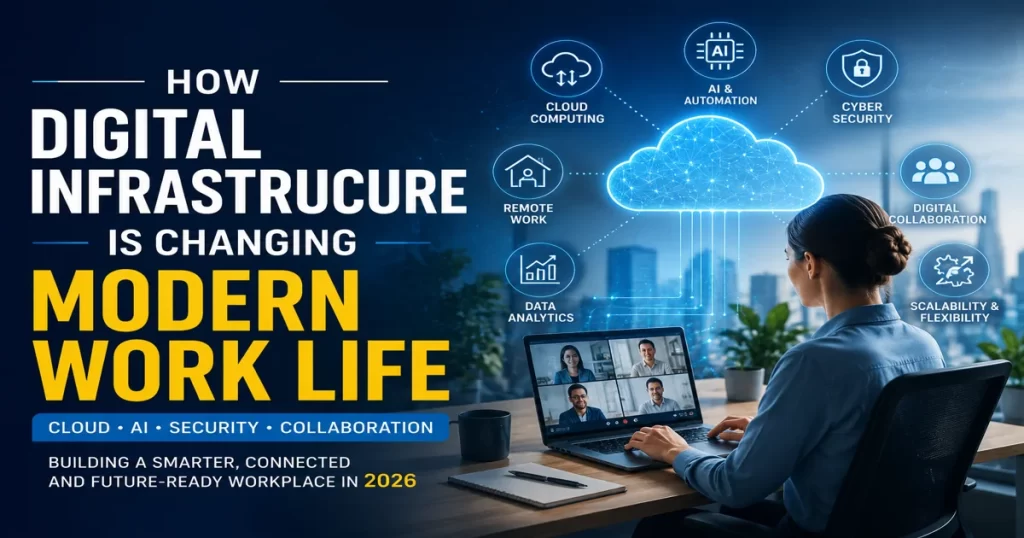
Modern work environments are evolving rapidly as organizations adopt digital systems that support communication, automation, remote collaboration, and enterprise security. Understanding how digital infrastructure modern work life continues transforming industries is increasingly important in 2026 as businesses rely on cloud computing, artificial intelligence, and cybersecurity systems to maintain operational efficiency.
Digital infrastructure now influences nearly every aspect of professional activity. From remote meetings and cloud-based workflows to automated analytics and cybersecurity monitoring, organizations are redesigning how employees collaborate and how businesses operate globally.
This transformation is not limited to technology companies. Healthcare providers, manufacturers, financial institutions, educational organizations, and public services are all investing in digital systems to improve flexibility, scalability, and resilience.
Table of Contents
- Why Digital Infrastructure Matters in 2026
- The Rise of Hybrid and Remote Work
- Cloud Infrastructure and Enterprise Operations
- Artificial Intelligence in Daily Workflows
- Cybersecurity Challenges in Modern Workplaces
- Digital Collaboration and Communication Tools
- Workforce Skills and Digital Adaptation
- Economic Impact of Digital Infrastructure
- Sustainability and Digital Transformation
- Future Outlook for Digital Work Environments
- FAQs
- Conclusion
Why Digital Infrastructure Matters in 2026
Digital infrastructure has become the operational backbone of modern organizations. Businesses increasingly depend on connected systems that support:
- Remote collaboration
- Enterprise communication
- Secure data management
- Cloud-based applications
- Real-time analytics
The importance of digital infrastructure expanded significantly as organizations adopted hybrid work models and distributed operations.
According to the National Institute of Standards and Technology (NIST), digital infrastructure frameworks help organizations improve resilience, scalability, and operational efficiency.
https://www.nist.gov/
Reliable infrastructure now influences productivity, security, and long-term business continuity.
The Rise of Hybrid and Remote Work
One of the clearest examples of how digital infrastructure modern work life has changed is the expansion of hybrid and remote work environments.
Traditional office operations often relied heavily on centralized infrastructure and in-person collaboration. Today, cloud-based systems enable employees to work from multiple locations while maintaining access to enterprise platforms.
Remote work systems now include:
- Video conferencing platforms
- Cloud storage services
- Project management tools
- Secure collaboration software
These technologies help organizations maintain productivity while offering greater flexibility to employees.
As discussed in our article on cloud infrastructure digital business, scalable cloud systems continue supporting distributed workforce models.
Hybrid work environments are expected to remain common across many industries beyond 2026.
Cloud Infrastructure and Enterprise Operations
Cloud computing plays a central role in digital transformation strategies.
Organizations increasingly use cloud infrastructure for:
- Enterprise software hosting
- Data storage
- AI model deployment
- Analytics processing
- Customer service platforms
Cloud systems provide scalability that traditional infrastructure often cannot support efficiently.
Hybrid and multi-cloud environments allow businesses to balance:
- Performance requirements
- Operational resilience
- Regulatory compliance
- Cost optimization
The Organisation for Economic Co-operation and Development (OECD) provides guidance related to digital economy infrastructure and technology adoption.
https://www.oecd.org/
Cloud adoption continues expanding because organizations require flexible systems capable of supporting rapid operational changes.
Artificial Intelligence in Daily Workflows
Artificial intelligence tools increasingly support routine business operations.
AI-driven systems help organizations with:
- Workflow automation
- Data analysis
- Customer support
- Predictive maintenance
- Digital content management
As explored in our feature 7 Ways Artificial Intelligence Is Transforming Industries, AI technologies are now integrated into enterprise platforms across sectors.
AI systems often enhance efficiency by automating repetitive administrative tasks, allowing employees to focus on strategic responsibilities.
Businesses also use AI-powered analytics tools to identify operational patterns and improve decision-making.
Cybersecurity Challenges in Modern Workplaces
As digital infrastructure expands, cybersecurity risks also increase.
Modern work environments face threats such as:
- Phishing attacks
- Ransomware incidents
- Cloud misconfigurations
- Unauthorized access attempts
- Data breaches
Organizations increasingly implement layered security frameworks including:
- Multi-factor authentication
- Endpoint protection
- Network monitoring
- Encryption systems
As highlighted in our cybersecurity risks 2026 article, protecting digital infrastructure remains a top enterprise priority.
The Cybersecurity and Infrastructure Security Agency (CISA) publishes best practices related to enterprise security.
https://www.cisa.gov/
Strong cybersecurity frameworks are essential for maintaining trust and operational continuity.
Digital Collaboration and Communication Tools
Digital communication platforms have transformed how teams collaborate.
Modern organizations rely on:
- Messaging systems
- Video conferencing platforms
- Shared cloud workspaces
- Real-time collaboration tools
These systems support geographically distributed teams while reducing communication delays.
Collaboration technologies also improve workflow transparency and project coordination across departments.
The growth of digital collaboration has influenced workplace culture, organizational structures, and employee expectations.
Workforce Skills and Digital Adaptation
The shift toward digital operations requires workforce adaptation.
Employees increasingly need skills related to:
- Cloud computing
- Cybersecurity awareness
- Data analytics
- AI-assisted workflows
- Digital communication tools
Educational institutions and enterprise training programs are expanding digital literacy initiatives to support workforce development.
Organizations that invest in employee training often improve long-term adaptability and operational efficiency.
Digital transformation depends not only on technology adoption but also on workforce readiness.
Economic Impact of Digital Infrastructure
Understanding digital infrastructure modern work life also requires examining economic implications.
Digital systems contribute to:
- Productivity growth
- Faster communication
- Operational scalability
- Global market accessibility
As discussed in our global economic outlook 2026 article, digital infrastructure investment continues supporting economic modernization.
Cloud platforms and AI systems enable smaller organizations to compete more effectively in international markets.
Technology-driven efficiency improvements may also support long-term economic resilience.
Sustainability and Green Technology Initiatives
Environmental sustainability is becoming increasingly important within digital transformation strategies.
Technology companies and cloud providers invest in:
- Energy-efficient data centers
- Renewable energy systems
- Carbon reduction initiatives
- Sustainable infrastructure planning
Organizations are evaluating digital infrastructure not only for performance but also for environmental impact.
Green technology initiatives may influence future infrastructure investment decisions across industries.
Digital Infrastructure in Healthcare and Education
Healthcare providers increasingly rely on digital systems for:
- Electronic health records
- Telehealth platforms
- Research collaboration
- Data analytics
Educational institutions use digital infrastructure for:
- Online learning environments
- Remote instruction systems
- Digital resource management
- Virtual collaboration tools
Reliable infrastructure enables greater accessibility and operational flexibility in both sectors.
Challenges of Rapid Digital Transformation
Although digital transformation provides many benefits, organizations also face challenges including:
- Integration complexity
- Cybersecurity risks
- Regulatory compliance
- Workforce training requirements
- Infrastructure costs
Balancing innovation with operational stability remains an important priority for enterprise leaders.
Responsible planning helps organizations adopt digital systems more effectively.
Future Outlook for Digital Work Environments
The future of digital infrastructure modern work life will likely include:
- Greater AI integration
- Expanded cloud infrastructure
- Increased automation
- Stronger cybersecurity frameworks
- Advanced remote collaboration systems
Digital transformation is expected to continue evolving gradually across industries.
Organizations that prioritize adaptability, workforce training, and infrastructure resilience may be better positioned for long-term operational success.
FAQs
1. What is digital infrastructure modern work life?
It refers to how cloud computing, AI, cybersecurity, and collaboration technologies influence modern workplace operations.
2. Why is cloud infrastructure important for businesses?
Cloud systems provide scalability, flexibility, and remote accessibility for enterprise operations.
3. How does AI support workplace productivity?
AI automates repetitive tasks, supports analytics, and improves operational efficiency.
4. Why is cybersecurity important in remote work environments?
Remote systems increase digital exposure and require strong security protections.
5. Where can businesses find official cybersecurity guidance?
Organizations can access guidance through CISA and NIST resources.
Conclusion
Digital infrastructure continues reshaping modern work life by supporting remote collaboration, AI-driven automation, enterprise scalability, and cybersecurity resilience. As organizations expand digital operations, cloud systems and secure communication technologies remain central to long-term business transformation.
The future of work will likely depend on responsible technology adoption, workforce adaptability, and resilient digital infrastructure strategies.