Global economic outlook 2026
By News Story US • February 28, 2026
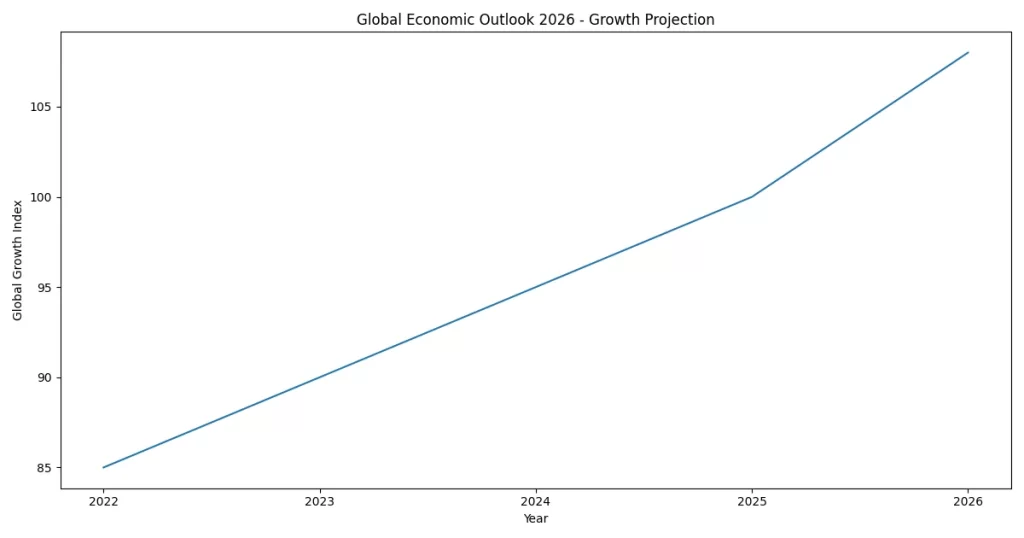
The global economic outlook 2026 reflects a period of gradual growth combined with persistent structural challenges. While several regions show steady expansion supported by consumer spending and technology investment, inflation pressures, geopolitical uncertainty, and trade adjustments continue influencing international markets.
Economic projections for 2026 suggest moderate growth across developed and emerging economies. However, outcomes vary by region depending on policy decisions, commodity markets, and financial stability conditions.
Why the Global Economic Outlook 2026 Matters
The global economic outlook 2026 matters because international economic trends influence:
- Trade flows
- Currency stability
- Employment levels
- Investment decisions
- Commodity pricing
Global interconnectedness means economic shifts in one region can affect markets elsewhere.
International economic analysis is published by institutions such as the International Monetary Fund (IMF):
https://www.imf.org/
These reports provide detailed global projections and risk assessments.
Growth Trends in Developed Economies
Developed economies in North America and Europe are projected to experience moderate growth in 2026.
Key factors influencing growth include:
- Consumer demand
- Labor market stability
- Digital transformation
- Infrastructure investment
As discussed in our coverage of the US jobs report 2026, stable employment conditions support household spending.
Central banks in developed markets continue monitoring inflation trends when adjusting monetary policy.
Fiscal Policy and Infrastructure Investment
In several developed economies, fiscal policy continues to play a stabilizing role within the global economic outlook 2026. Governments are prioritizing infrastructure modernization, digital transformation, and energy transition projects to support long-term growth.
Infrastructure investments in transportation networks, broadband expansion, and renewable energy systems aim to increase productivity and create employment opportunities. While fiscal spending varies by region, many governments are focusing on sustainable growth strategies rather than short-term stimulus measures.
Public-private partnerships are also becoming more common in infrastructure development, allowing governments to share investment risks while accelerating economic progress.
Emerging Markets and Industrial Expansion
Emerging economies show varied performance in the global economic outlook 2026.
Growth drivers include:
- Infrastructure development
- Manufacturing expansion
- Technology adoption
- Foreign investment
However, emerging markets may also face:
- Currency volatility
- External debt pressures
- Commodity price fluctuations
Balanced fiscal policies remain important for economic resilience.
Inflation and Monetary Policy
Inflation remains a central issue in global markets. As highlighted in the US inflation CPI report 2026, moderate inflation continues influencing monetary policy decisions.
Central banks across regions evaluate:
- Consumer price growth
- Wage trends
- Energy market shifts
- Supply chain conditions
The World Bank provides global inflation data and policy analysis:
https://www.worldbank.org/
Monetary policy coordination remains essential to maintaining financial stability.
Central Bank Coordination
Central banks across regions continue monitoring inflation and financial conditions closely. Coordination between major economies can reduce market volatility and enhance global stability.
While each country sets policy based on domestic conditions, global financial interconnectedness means monetary decisions often influence cross-border capital movements. As discussed in our article on the stock market reaction to economic data, investor sentiment frequently responds to coordinated policy signals.
Trade and Supply Chain Adjustments
Global trade patterns continue evolving in 2026. Supply chains are diversifying to reduce dependency on single-region production hubs.
Key developments include:
- Nearshoring initiatives
- Regional trade agreements
- Digital trade expansion
- Logistics modernization
International trade data is monitored by the World Trade Organization (WTO):
https://www.wto.org/
Trade resilience plays a significant role in economic stability.
Technology and Productivity Growth
Technology adoption remains a strong contributor to productivity growth within the global economic outlook 2026.
As explored in our article on artificial intelligence trends 2026, AI-driven systems support efficiency improvements across sectors.
Digital infrastructure investments continue driving economic modernization in both developed and emerging markets.
Energy Markets and Sustainability
Energy markets influence global economic performance. Renewable energy investments and carbon transition strategies shape long-term growth.
Energy price fluctuations may impact:
- Manufacturing costs
- Transportation expenses
- Household utility spending
Sustainability initiatives aim to balance environmental responsibility with economic expansion.
Financial Market Stability
Financial markets respond to global economic signals. As discussed in our coverage of the stock market reaction to economic data, investors monitor macroeconomic indicators closely.
Stable banking systems and transparent regulatory frameworks support financial resilience.
Labor Markets and Demographic Shifts
Demographic changes influence workforce participation and long-term growth prospects.
Important factors include:
- Aging populations in developed nations
- Youth workforce expansion in emerging economies
- Migration patterns
- Skills development
Workforce adaptability remains essential for sustained economic growth.
Geopolitical and Policy Considerations
Geopolitical developments can influence trade flows, energy markets, and investment decisions.
Economic policymakers focus on:
- Cross-border cooperation
- Financial regulation
- Digital governance
- Infrastructure modernization
International coordination helps mitigate economic risks.
Risks and Uncertainties
While the global economic outlook 2026 shows moderate growth projections, several risks remain:
- Inflation volatility
- Trade disputes
- Currency fluctuations
- Financial market instability
- Natural resource supply disruptions
Monitoring official data sources supports informed evaluation of evolving conditions.
Long-Term Outlook Beyond 2026
Long-term economic growth depends on:
- Innovation
- Education and workforce training
- Infrastructure development
- Sustainable investment strategies
Global economic collaboration remains a critical factor for stability.
FAQs
1. What is the global economic outlook 2026?
It refers to projections about worldwide economic growth, inflation trends, and trade developments for 2026.
2. Who publishes global economic forecasts?
Institutions such as the IMF and World Bank publish global economic reports.
3. How does inflation affect global growth?
Persistent inflation may influence monetary policy and reduce purchasing power.
4. Why are supply chains important?
Efficient supply chains support trade stability and economic resilience.
5. Where can official global data be accessed?
Official data is available through IMF, World Bank, and WTO websites.
Conclusion
The global economic outlook 2026 reflects moderate growth combined with ongoing structural adjustments. While developed and emerging markets show resilience, inflation trends, trade patterns, and policy decisions continue shaping global performance.
Careful monitoring of official economic indicators and international cooperation will remain central to maintaining stability in the years ahead.